Showing posts with label CSA. Show all posts

Monday, May 21, 2012

Rhubarb in the Bag

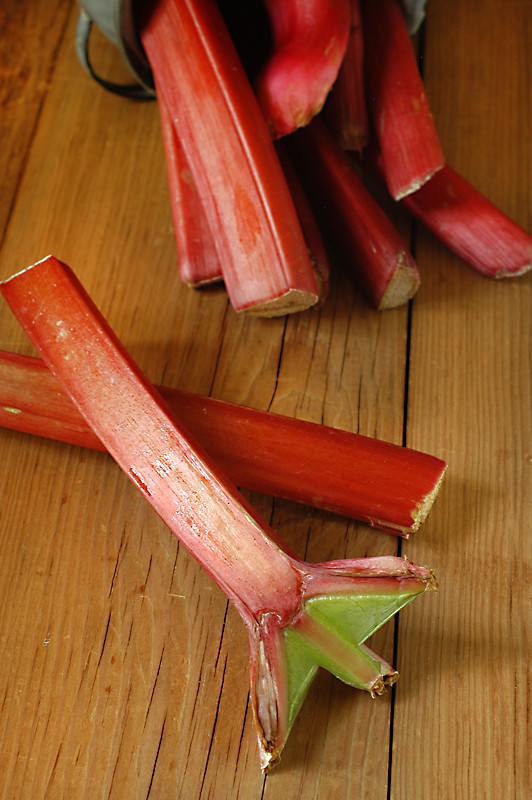
I am a lucky girrrl.  Some friends of mine are currently enjoying spring in Ireland and France. While they are gone they asked me to sit on their house.  This I do not mind for many reasons.  I get to watch Mad Men, not just for the vintage 60s suburban kitchens (can't wait for the 70s) but also for Joan's pencil necklace.  Jackson and I get to stalk the herd of wild rabbits that have wiped out the young eggplant seedlings in the backyard.  Sadly due to Jackson's incredible agility and prey drive, there is no off leash pursuit since the fences surrounding the yard barely slow down his fierce devotion to Kill the Wabbit.  But the best thing about house sitting (until the pool opens) is the weekly CSA.  So far I've enjoyed baby spinach, eggs, broccoli, lettuce, chard, asparagus, and basil.  This week included something I'd never cooked with before - rhubarb.

rhubarb 1

Rhubarb is not exotic or new but it's just one of those ingredients that never made an appearance in the cooking adventures of my youth.  So it was a bit of a surprise to see it in the bag of spring offerings.  Rhubarb seems to me to be one of those old fashioned vegetables.  I'm sure my grandmother would know what to do with these stalks.  I do remember seeing numerous recipes in old church spiral bound cookbooks, usually involving pies, crumbles and cobblers.  The most common use was to pair it up with the first spring fruit, strawberries.  The strawberry's sweetness balanced out the rhubarb's wincing tartness.  I just didn't have enough to make a pie.  Luckily for me my recent batch of library cookbooks included Wild Flavors by Didi Emmons and the recipe for Coconut Rice Pudding with Rhubarb.

Coconut Rice Pudding with Rhubarb

Makes 6 servings
Rice Pudding:
1/2 cup brown rice
1/2 cup white rice 
1/2 cup sugar
1/2 teaspoon cardamom
Pinch salt
3 cups coconut milk (two 13-ounce cans will do)
2 - 3 cups soy milk, almond milk or half-and-half
Topping:
3 large stalks rhubarb (about 3/4 pound), thinly sliced
3 tablespoons sugar
1.  To make the pudding, combine the rice, sugar, cardamom, salt, 2 cups soy milk, almond milk, or half-and-half, and coconut milk in a medium saucepan over medium heat.  Let the mixture come to a boil, then reduce the heat to very low, cover, and let cook until thick and the rice is tender, about 1 1/2 - 2 hours, stirring from time to time to keep the pudding from sticking to the bottom of the saucepan.  If it does stick to the saucepan, add more soy milk, almond milk, or half-and-half as needed.
2.  Transfer the pudding to a container with a lid and let it come to room temperature uncovered, then chill in the refrigerator, covered.
3.  Meanwhile, to make the topping, combine the rhubarb, sugar, and 1/4 cup water in a small saucepan over low heat.  Let the mixture come to a simmer, and let simmer until the rhubarb softens while still holding its shape, about 5 minutes.  Transfer the rhubarb to a container with a lid and let it come to room temperature uncovered, then chill in the refrigerator, covered.
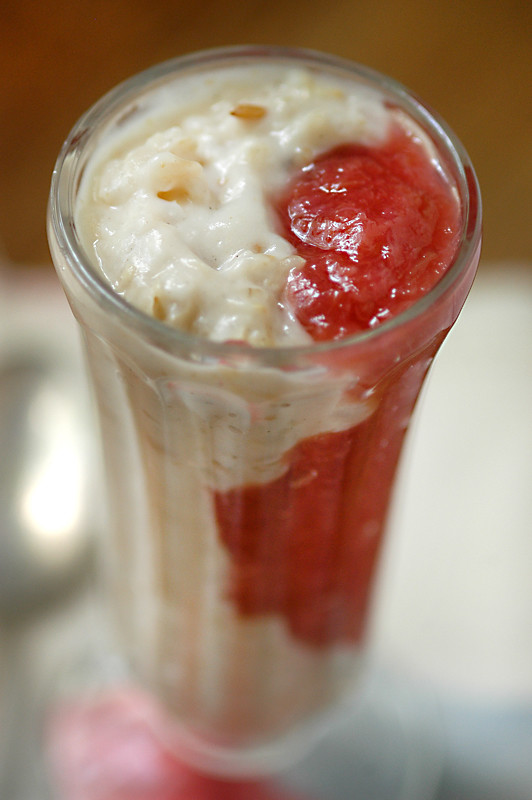
4.  To serve, spoon the rice pudding into clear glasses, then spoon the rhubarb mixture over the rice pudding.  
A couple of notes to the recipe above.  I used everything I had on hand so, 1 cup of brown rice instead of mixing the two, two 14 ounce cans of lite coconut milk, and 2 cups of 2% milk instead of the soy milk.
rhubarb 2

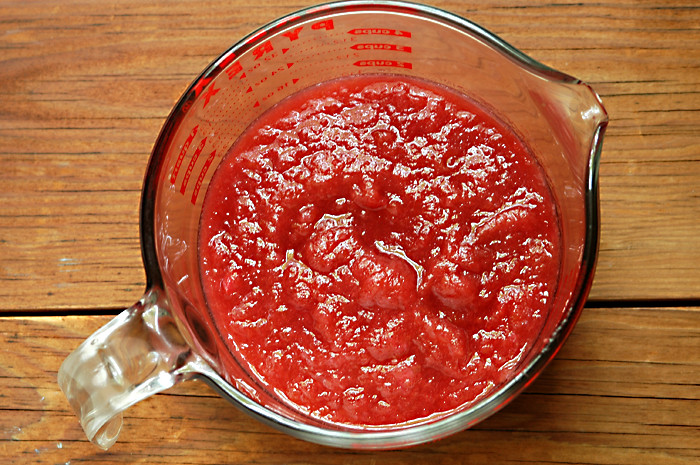
Additionally I wandered far afield of the topping recipe.  I wanted more of a rhubarb sauce instead of a slightly cooked rhubarb topping.  So 2/3 cup of sugar instead of 3 tablespoons and cooked it until it broke down into a chunky sauce.
rhubarb 4

Wow!  The coconut rice pudding is luscious on it's own but adding the distinctive sweet and sour rhubarb sauce turns it into an exquisite dessert.  Not only that but this sauce would be great on oatmeal, yogurt, and ice cream.  So thank you CSA farmers, rhubarb rocks.

Saturday, February 23, 2008

Government Cheese


While we have been known to enjoy a wide variety of cheeses, this is one that neither of us has had the necessity to experience...yet. That big brick of USDA American cheese is an unpleasant reminder that the "Trickle Down Theory" of economics didn't really trickle down far enough in practice.

Flash forward to today and our current economic dilemma. The collapse of the sub-prime market. Recession. Exploding gas prices. The disaster that is our health care "system". With the presidential election nipping at our heels, the current administration has decided that the best way to handle these financial dire straights is to hand taxpayers a $600.00 check with the hope that we will spend every last cent of it and jolt the economy. Will it help? Or will our collective belts tighten even more once our $600.00 is gone?

The business of food in America seems to me to be entering a golden age. Drawing away from overly processed, chemically laden foods. Understanding the necessities of locally grown and harvested produce. Chefs and restaurateurs have enjoyed riding the wave of love that our Foodie Nation bestows on those who serve fine cuisine. Foodies write blogs, they watch and discuss in detail the various food based television shows. They pore over the many food porn magazines our publishing industry produces. The question is, will our current economic woes throw a monkey wrench into the massive food industry machine?

What can we expect in the upcoming year? Will Tom Colicchio's juggernaut of Craft restaurants continue to expand or will his over priced food force a scale back of under performing partners? Will Martha Stewart regret buying Emeril Lagasse lock, stock and fry pan once she realizes that middle America can do just fine with some no name gadget over the same thing with Emeril's (or her) name slapped on it? Could a severe American recession trigger a world wide recession leading to unexpected environmental benefits? Might a Japanese recession save the Blue Fin tuna? Will American cattlemen move away from massive corn and grain feed lots that depend upon on chemicals and antibiotics and revisit grazing as corn prices sky rocket to supply our new ethanol needs?

Action/Reaction. How you spend your hard earned dollars makes a difference. Join a farm subscription or community supported agriculture, shop at the local farmer's market. Grow a garden. Buy your meat directly from the producer and know how your meat was raised. (Buying half a side of beef not only locks in the price you pay, but will keep you from consuming poorly processed meats.) Buying directly from the person raising the beef puts more money in their pockets and less in those of the massive processors. Make meals at home for the whole family. Re-instituting the family dynamic of leftovers can have unexpected benefits as a family learns to bond if only in revolt over consuming yet more tuna casserole. It's the stuff family legends are made of.

Times are tough and could get tougher. Make the smart choices, or you may find yourself chewing on a big, artificially colored, processed American government brick.